
Blog posts tagged "Security"
The Australian Federal Government is not alone in dealing with challenges like natural disasters, global pandemics and economic uncertainty. Like many governments, they are looking for new and innovative ways to tackle these challenges. FST Government 2023 is an exciting conference that brings over 200 government leaders together to explo

From pure voice to data, and now with the connectivity provided to devices and machines, telco systems make it possible to deliver digital services to society. Thanks to telecom systems, we can keep in touch with each other and reach the information sources we need at any time and anywhere. As we have become increasingly
According to a recent study, 96% of applications in the enterprise market use open-source software. As the open source landscape becomes more and more fragmented, the task to assess the impact of potential security vulnerabilities for an organisation can become overwhelming. Ubuntu is known as one of the most secure operating systems, but

In Ernest Hemingway’s novel “The Sun Also Rises,” there is a memorable exchange between the author and the main character, Mike. When asked how he went bankrupt, Mike responds with a concise yet profound answer: “Two ways. Gradually, then suddenly.” Innovation happens much in the same way. Gradually, then suddenly. Ideas simmer and evolv

Strengthen your cloud cyber security with Ubuntu Pro and confidential VMs. This blog dives into the crucial role your OS plays in cloud security and highlights the extensive security measures offered by Ubuntu, including the game-changing confidential computing technology.

One of the most frequent questions we get during conversations with our customers is “What’s the difference between security maintenance and support?” The word “support” has a wide range of meanings and can be interpreted in different ways depending on where it is used. Especially in the open source landscape, the terms “security maintena

We’ve all read the headlines about spectacular data breaches and other security incidents, and the impact that they have had on the victim organisations. And in some ways there’s no place more vulnerable to attack than a big data environment like a data lake.
Phoenix Systems, a Swiss company, partnered with IBM and Canonical to create a hyper-secure OpenStack cloud focused on data sovereignty and data protection. Switzerland is a country where data must be hosted within its borders, and for many workloads, public clouds are not an option. Phoenix Systems stepped in to fill this niche by buildi

Are you interested in the latest trends in open source technologies? Look no further than Everything Open 2023 in Melbourne, Australia! Event info: https://2023.everythingopen.au/ From 14-16 March 2023, the brightest minds in open source technologies will come together to share their expertise, insights, and experiences. If you’re passion
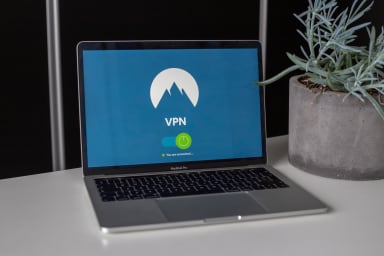
Why do we need a VPN server? A VPN (Virtual Private Network) server is a network server that allows users to create a secure and encrypted connection to another network over the internet. Here are some reasons why we need a VPN server: Security: VPNs provide a secure way to access the internet, protecting sensitive
At Canonical, we often get questions about open-source security and of course, Linux security is a common topic. Based on a recent webinar hosted by our security team and an accompanying blog post, we put together the most common questions we receive. This is by no means an exhaustive list, but it should give you

Set up secure air gapped network and automate hardening, patch management and standards like CIS, DISA-STIG and FIPS 140-2 certifications on Ubuntu.

Ubuntu Pro, Canonical’s comprehensive subscription for secure open source and compliance, is now generally available. Ubuntu Pro, released in beta in October last year, helps teams get timely CVE patches, harden their systems at scale and remain compliant with regimes such as FedRAMP, HIPAA and PCI-DSS. The subscription expands Canonical’

It’s a new year, and an especially great time to reflect on the security of your robots. After all, those interested in breaching it are probably doing the same. In previous articles, we discussed ROS security by detailing practical steps for securing your robots on Ubuntu and the challenges the community faces. In this blog

In a previous post, I explained how we made our Ubuntu image 15 times smaller by chiselling a specific slice of Ubuntu for .NET developers. In this blog, I will provide step-by-step instructions on customising your chiselled Ubuntu base images for any use case. Chiselled Ubuntu containers combine Distroless and Ubuntu to create smaller, m

Last August, we announced 6 MB-size Ubuntu base images designed for self-contained .NET applications — we called them “chiselled Ubuntu”. How did we make our Ubuntu base images 15 times smaller? And how can you create your own chiselled Ubuntu images? In this blog, I explain the idea behind Distroless container images, which inspired us