
Blog posts tagged "networking"
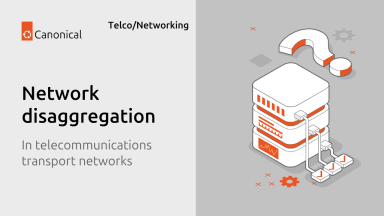
Telecommunications networks have traditionally been built from tightly integrated systems. A router vendor supplies the forwarding hardware, network operating system (NOS), routing protocols, management interfaces, upgrade process, and support contract as one product. However, growing demands for flexibility and cost control have prompted

When distributed workloads stall because nodes cannot exchange small messages quickly and consistently, the network is the limiting factor. How do you solve that problem? InfiniBand offers one solution. InfiniBand is an interconnect, meaning the end-to-end communication system that links compute, storage, and accelerator nodes. It is impl
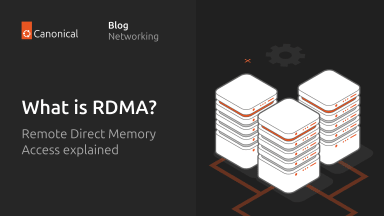
Modern data centres are hitting a wall that faster CPUs alone cannot fix. As workloads scale out and latency budgets shrink, the impact of moving data between servers is starting to become the most significant factor in overall performance. Remote Direct Memory Access, or RDMA, is one of the technologies reshaping how that data moves,

At NVIDIA GTC Washington D.C., Canonical is pleased to support the arrival of the NVIDIA BlueField-4 – the newest generation of the data processing unit (DPU) family. NVIDIA BlueField-4 is an accelerated infrastructure platform for gigascale AI factories. By combining NVIDIA Grace CPU and NVIDIA ConnectX-9 networking, it delivers 6x the c
The combined solutions simplify infrastructure operations and accelerate time-to-value for AI, telecom, and enterprise computing workloads. Accelerate deployment and operations of BlueField DPUs with Canonical Kubernetes At GTC Paris today, Canonical announced support for the NVIDIA DOCA Platform Framework (DPF) with Canonical Kubernetes

Choosing the right Container Network Interface (CNI) for Kubernetes is critical to achieving optimal performance, security, and scalability. With the launch of Canonical Kubernetes LTS (long-term support) last month, Canonical decided to integrate Cilium as the default CNI in order to reflect our commitment to delivering a modern, securit

It has been several years since Canonical committed to implementing support for NVIDIA smart NICs in our products. Among them, Canonical’s metal-as-a-service (MAAS) enables the management and control of smart NICs on top of bare-metal servers. NVIDIA BlueField smart NICs are very high data rate network interface cards providing advanced s
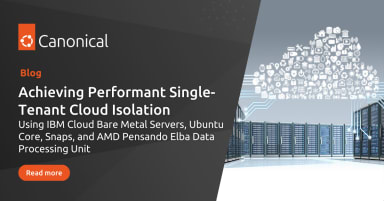
Discover how IBM Cloud’s bare metal servers offer highly confined and high-performing single-tenant cloud isolation through the use of Ubuntu Core and Snaps, supported by the AMD Pensando Elba DPU (Data Processing Unit). This setup enables the creation of secure and efficient environments for each tenant. Its design ensures the total sepa
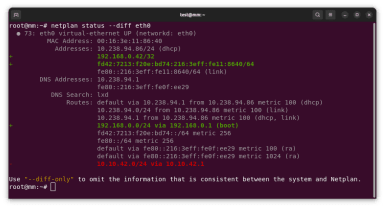
After more than 7 years of development, Netplan v1.0 delivers improved stability and maintainability alongside a host of other new features.
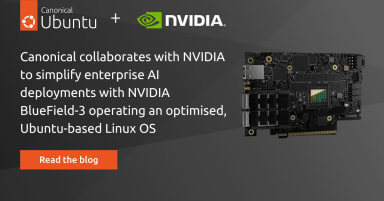
The NVIDIA BlueField-3 networking platform – powering the latest data processing units (DPUs) and SuperNICs, and transforming data centre performance and efficiency – runs BlueField OS, an optimised Linux operating system (OS) derived from Ubuntu. With Ubuntu’s signature maintenance and support guarantees, the comprehensive Ubuntu Pro sof
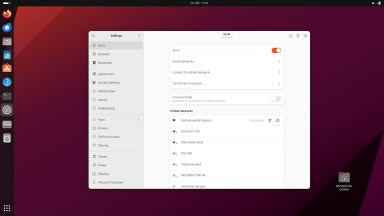
Learn how Netplan has established itself as the proven network stack across all variants of Ubuntu – Server, Cloud, Embedded and now Desktop.

In our previous blog, we introduced smartNICs as technology enablers for next-generation converged data centres. We covered how smartNICs can increase efficiency and drive return on investment. In this blog post, we explain how this innovative technology can help the telecom industry. SmartNICs use cases for the telecom sector are still e

Data centre efficiency is a central cost factor in enterprise IT environments. So, in the face of rising energy costs and increasingly resource-intensive workloads, it is more important than ever for businesses to seek out greater optimisation. Traditionally, CPUs have been used for the majority of data centre workloads, including network

SmartNICs, the programmable network adapters that make data centre networking, security and storage efficient, scalable and modular, have started to play a significant role in the industry. Combining traditional NIC capabilities with advanced processing power, smartNICs allow many infrastructure capabilities to be offloaded from CPU, thus

Ubuntu Server 21.04 (Hirsute Hippo) brings significant improvements to automation and stability fronts with new extensions to the Ubuntu Server Live Installer and phased updates in the Advanced Package Tool (APT)
NVIDIA is redefining the data center around the concept of data processing units (DPUs): powerful network cards running Ubuntu out of the box that combine hardware and software to deliver new classes of cloud architectures – in the data center and at the edge. Whether for private clouds, edge computing or data center technologies, we